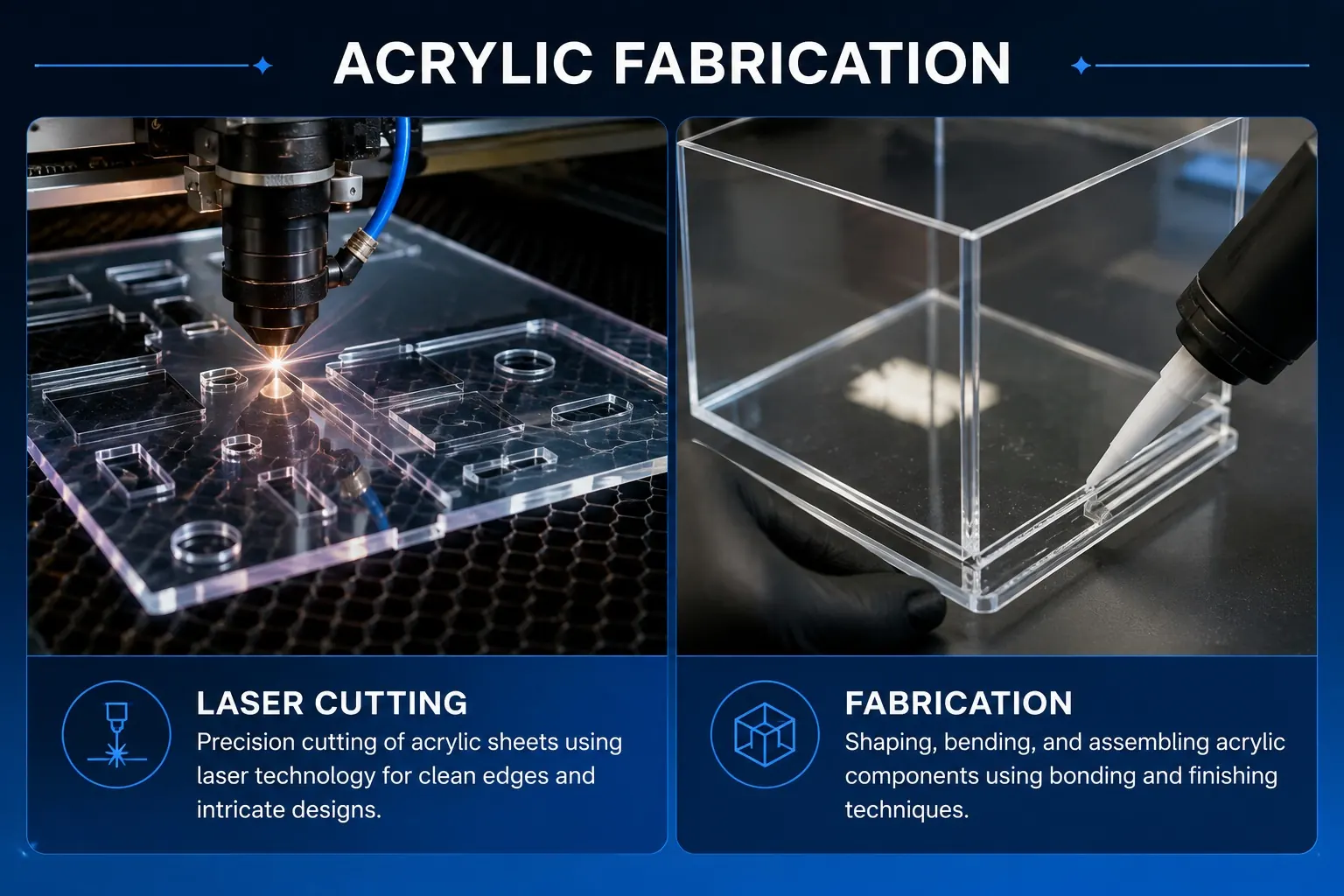
Acrylic is widely used for displays, signage, covers, enclosures and presentation pieces because it can be cut and finished into clean, precise forms. Laser cutting is particularly useful for repeatable shapes, holes, lettering and detailed profiles.
Choosing acrylic
Clear, frosted and coloured acrylic can create very different visual results. Your choice should reflect whether the part needs transparency, diffusion, branding or a specific appearance.
Thickness matters
HyCube Works works with acrylic thicknesses from approximately 2 mm to 25 mm. Thicker material changes cutting parameters and may also affect edge appearance and fabrication methods.
Laser cutting vs fabrication
Laser cutting creates the flat profiles and detailed features. Fabrication can then involve bending, bonding, polishing or assembly to turn cut sheets into finished products.
Common finishing options
- Flame polishing for a clearer edge on suitable acrylic.
- Bonding for assembled components and enclosures.
- Engraving for labels, graphics and identification.
Where acrylic works well
Typical applications include display stands, product signage, protective covers, enclosures and presentation pieces. For the best result, share the intended use, dimensions, thickness and finish requirements before fabrication.
Have a part to manufacture?
Share your CAD file, quantity and requirements with HyCube Works for 3D printing, fabrication or digital manufacturing support.
Get a Quote →