
3D printing and CNC machining can both produce functional prototypes and low-volume components, but they remove or add material in fundamentally different ways. The right process depends on geometry, material, tolerance, quantity and finish.
3D printing
3D printing builds a part layer by layer. It is useful for complex internal geometry, lightweight structures, fast design iterations and prototypes where traditional tooling would add cost or lead time.
CNC machining
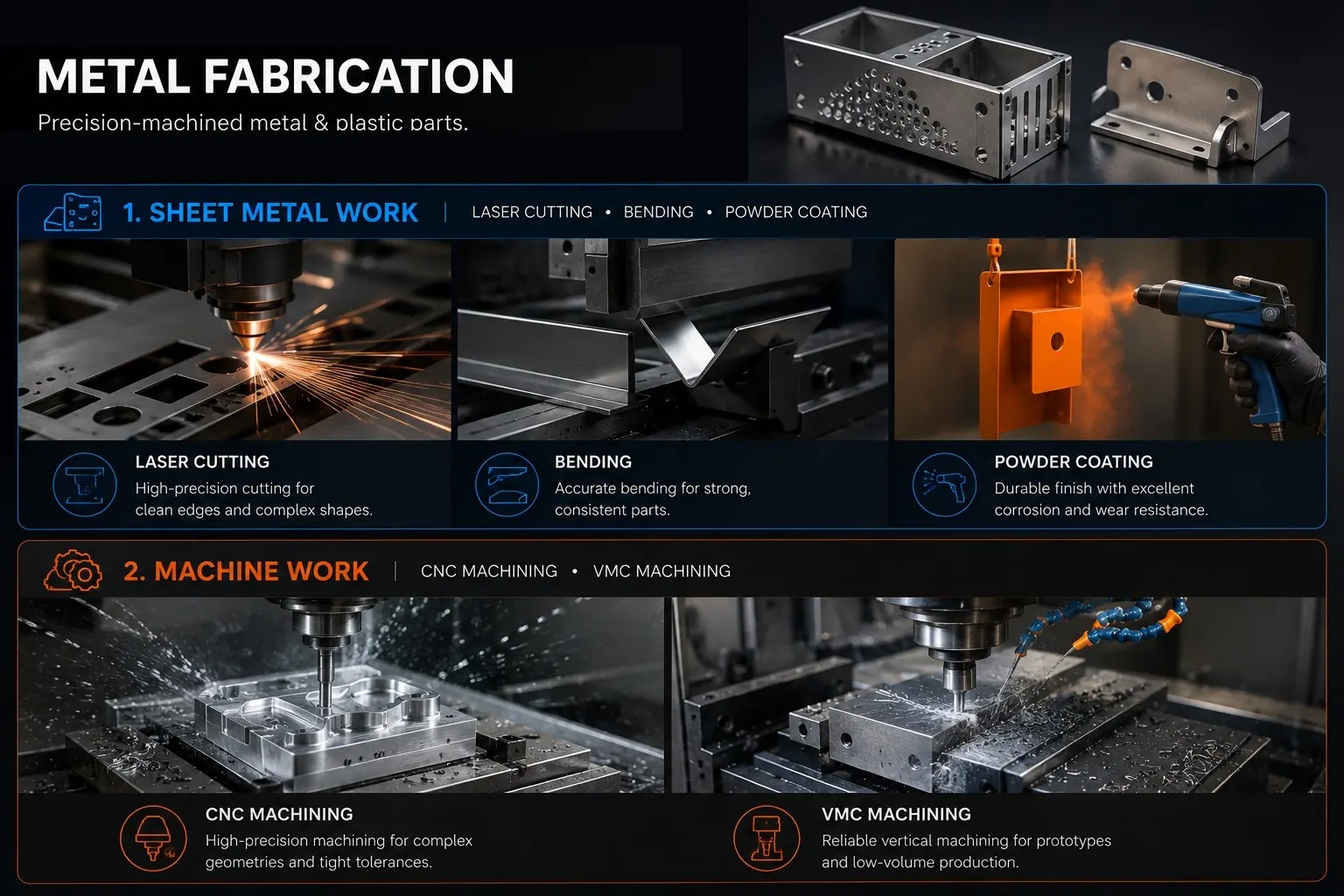
CNC machining starts with solid stock and removes material using cutting tools. It is useful when tighter dimensional tolerances, specific engineering materials, machined surfaces or robust functional parts are required.
Key differences
- Geometry: Additive manufacturing can create shapes that are difficult to machine.
- Tolerances: CNC is often preferred when tighter dimensional control is required.
- Material: CNC can work directly from a wide range of metal and plastic stock.
- Iteration: 3D printing is often convenient for quick design changes.
- Finish: Machined surfaces can provide a different appearance and dimensional result from printed surfaces.
A hybrid approach can work
A prototype may begin as a 3D print for quick validation and move to CNC machining when the design is proven and tighter tolerances or a different material become important.
HyCube Works provides both 3D printing and metal fabrication capabilities, allowing the manufacturing method to be considered alongside the actual part requirements.
Have a part to manufacture?
Share your CAD file, quantity and requirements with HyCube Works for 3D printing, fabrication or digital manufacturing support.
Get a Quote →